
The tuna preservation project
The Florios of SicilyThis flow traces Vincenzo Florio’s effort to make tuna safer to store and easier to sell, transforming a traditional fishery into a modern industry.
increasing Bearing strength in each event
 decreasing
Bearing strength in each eventdecreasingA fading market
A fading market
Demand falls
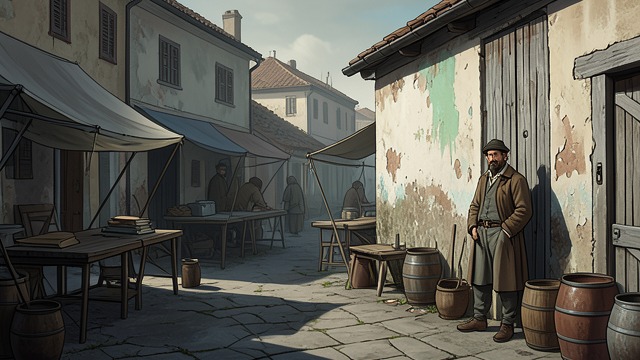
Sales of salted tuna decline as ship owners fear that preserved fish may cause scurvy. Vincenzo Florio sees that the traditional product is losing buyers despite the abundance of local catches.
A memory becomes a method
A childhood memory of Paolo Florio storing fish in olive oil gives Vincenzo an alternative to salt. He asks Carlo Giachery to help test whether cooking and sealing tuna can preserve it.
The experiment begins where family memory, commercial pressure, and industrial curiosity meet.
Waiting for proof

Waiting for proof
A long experiment
Vincenzo prepares samples of cooked tuna in oil and stores them in sealed containers. He waits a year to discover whether the method can withstand long storage or a sea voyage.
Patience against doubt
The work depends on careful observation rather than a quick commercial claim. The trial gives Vincenzo a chance to develop a product beyond the customary barrels of salted fish.
The delay is part of the innovation: success requires proof that a promising idea can become reliable production.
Industrialized tuna
Industrialized tuna
A different tonnara
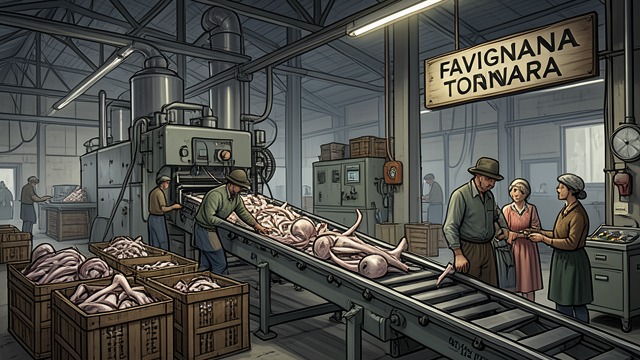
At Favignana, Vincenzo Florio introduces boiling and preservation in oil, and reorganizes the plant to employ entire families. Vito Cordova helps him make the change understandable to the workers.
A new product economy
Tuna oil, bones, and other byproducts are used rather than discarded. The preservation method helps the Florios expand sales across the Mediterranean.
The project turns the tonnara from a seasonal ritual into an industrial workplace, with new opportunities and new demands on its community.
Late 1830s
May 1830s to May 1840s
1850s to 1860s
